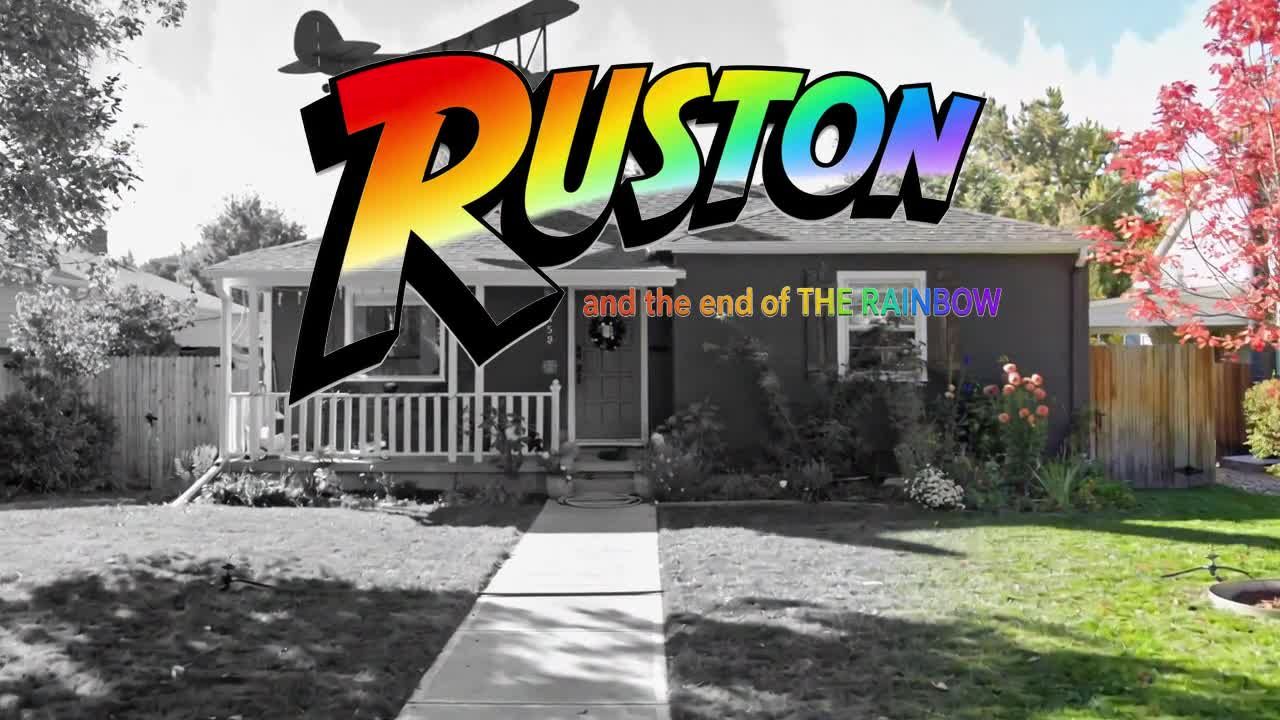
It's finished. The final film runs 11:10, and it's up on YouTube now.
"Ruston and the End of the Rainbow" is an animated short I directed and edited with AI video tools. The tools generate frames, but the film comes from the same things any edit depends on: a shot plan, a consistent visual style, continuity, and a process that keeps every decision on record.
The story
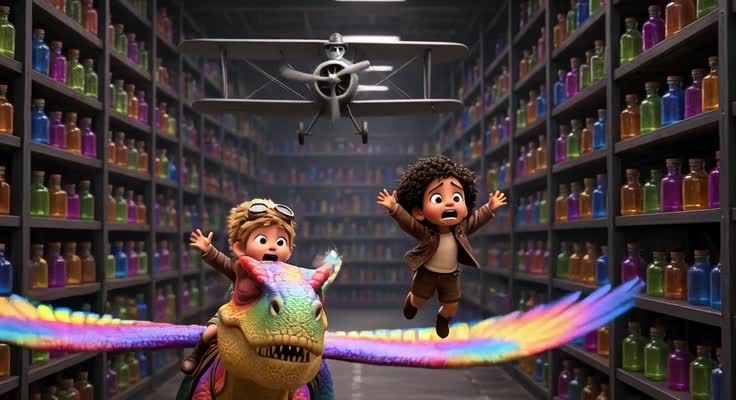
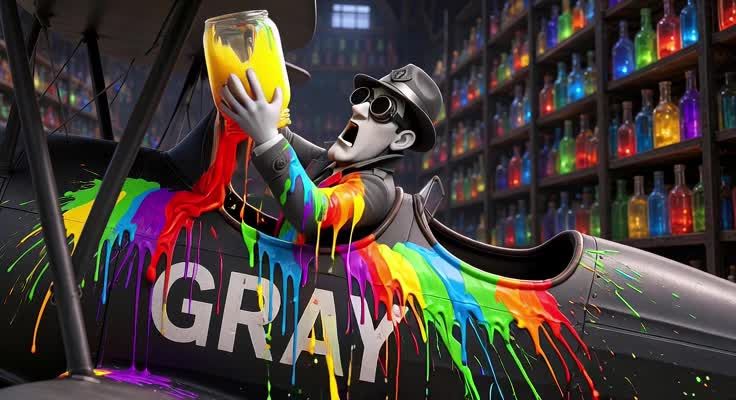
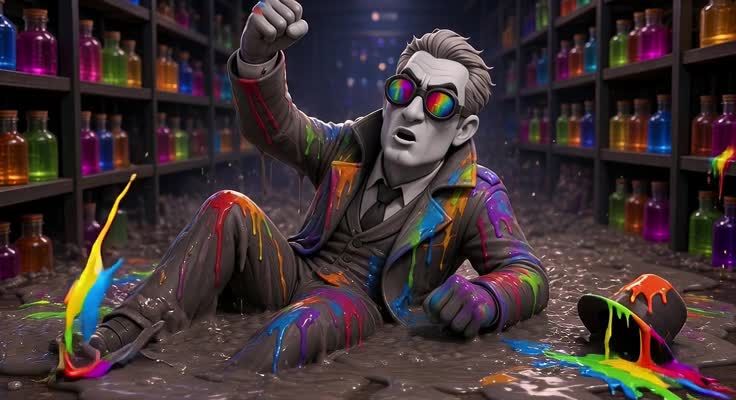
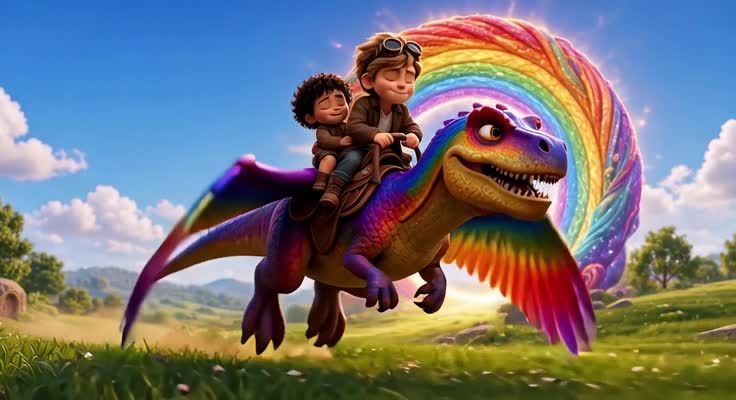
Captain Gray steals the color from the home world, and everything turns grayscale. Ruston and his tiny sister Reese climb a rainbow, fly a yellow biplane, and team up with a winged rainbow T-rex. In a warehouse showdown they splash Gray with rainbow paint, escape, and reach a floating rainbow gate in Rainbow Land. In the end, they bring the color back to the world. Ruston carries the dialogue. Reese has exactly one word: "Again."
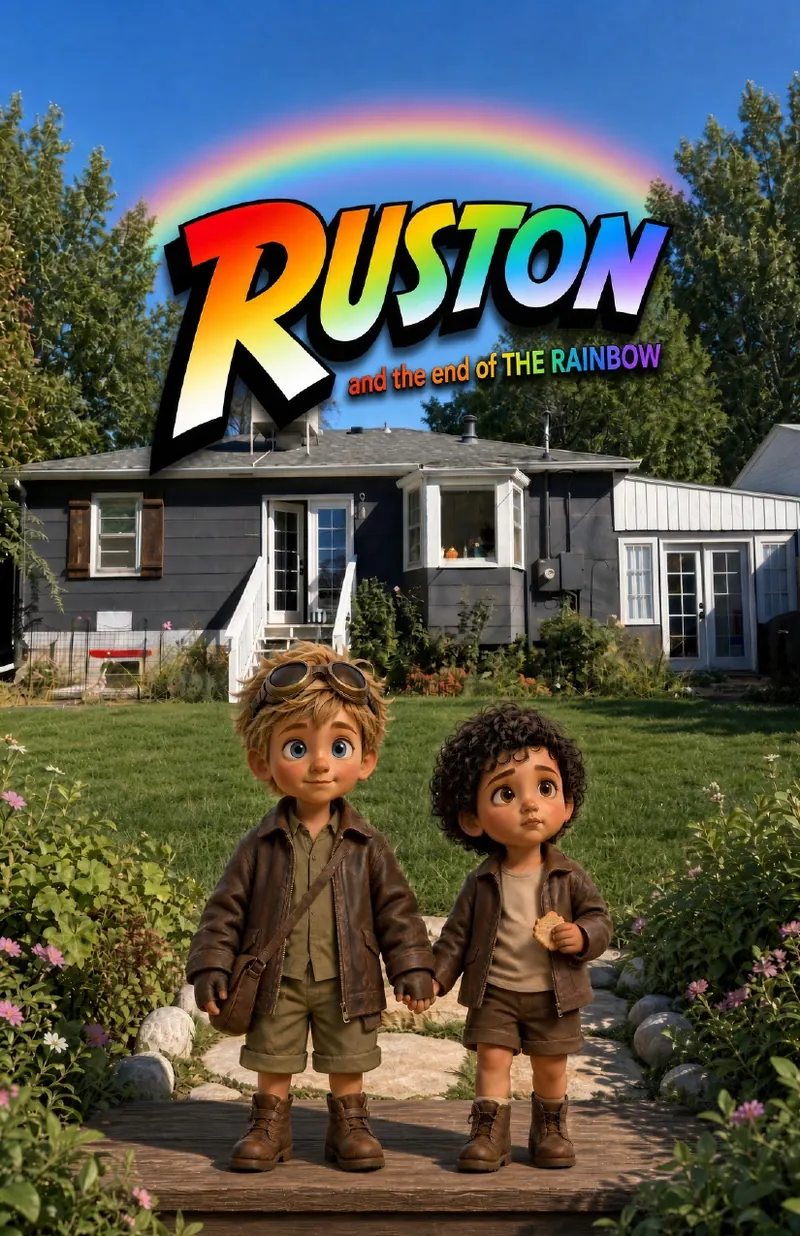
The picture book
The story is a picture book now, too. Flip through it below, cover to cover.
A style guide, applied to every frame
I treated the film like a brand system. Every character has a character sheet and approved reference stills before a single shot is animated, so the look is decided once and then protected. The color story is a written rule: the home world is grayscale, while the kids, the T-rex, the biplane and the rainbow stay in full color. With the rule on paper, judging a shot is simple. If something gray picks up color, or a hero loses it, the shot goes back.
Shot planning and an approve and lock process
- Plan by shot. The film is broken into numbered shots, and each one starts from its own approved still.
- Generate. Each still is animated as a short clip in Grok Imagine.
- Review. Every clip is checked with a frame grid and an automatic transcript, so motion, continuity and dialogue are all verified, not guessed.
- Approve and lock. Once a clip passes, it is approved and locked as a numbered shot. Locked shots don't change, which kept the cut stable while the rest of the film was built.
- Assemble. The edit is cut together in FFmpeg from the locked shots, so every version of the cut, from the first rough cut to the final, can be rebuilt exactly.
Editing problems, solved with editing
- Dialogue on the wrong character. In wide shots the AI kept handing lines to whoever was nearby. Ruston's "Yes it is!" came out of Captain Gray, then the T-rex. Instead of regenerating forever, I cut to a close-up insert for the line and then back to the wide, the same fix an editor would use on live footage.
- Continuity. Reese kept drifting too big, and Gray's skin kept drifting away from gray. The character sheets made those errors easy to spot and correct shot by shot.
- Type in motion. Lettering like "GRAY" on the plane garbles when things move, so shots with text stay mostly static.
- Large media. Big files are split to move cleanly between machines, so nothing is lost between versions.
Built for sound
Every clip was generated without music, so the picture could be cut clean first and the sound built to it after the picture was locked.
What it shows
AI makes it possible for one person to produce an animated short, but it doesn't replace the craft. Planning shots, holding a visual style, fixing continuity in the edit and locking work in a clear order are what turn generated clips into a film. It's finished now, so go give it a watch.
Questions about the process? Say hello at hello@steveknowsweb.com.